The World Economic Forum's Travel & Tourism Development Index 2026, published on 25 September 2026, ranks 110 economies and finds cultural resources up 9.6% and natural resources up 4.1%, while affordability slipped in about three quarters of countries. For travellers, that points towards slower, quieter, nature-rich places like Warmia and Masuria in north-east Poland.
I read reports like this the way I read a weather forecast before a long walk. I look for the direction of the wind.
This year the wind is blowing towards quiet places. Towards lakes, forests, old brick towns and long kitchen-table breakfasts. Let me show you what the numbers say, and what they could mean if you travel slowly, or if you are quietly wondering whether a slow, small business could grow from places like these.
What is the Travel & Tourism Development Index?
The Travel & Tourism Development Index, or TTDI, is a benchmark run by the World Economic Forum (WEF). It measures how ready a country is to grow tourism in a sustainable way. The 2026 edition is the tenth in the series and covers 110 economies. It scores them across 17 pillars using 102 indicators, from air connectivity and infrastructure to natural resources, cultural resources and the benefits that reach local people.
In plain words: it is a health check for the places we travel to.
The headline numbers
Here is what the 2026 edition reports.
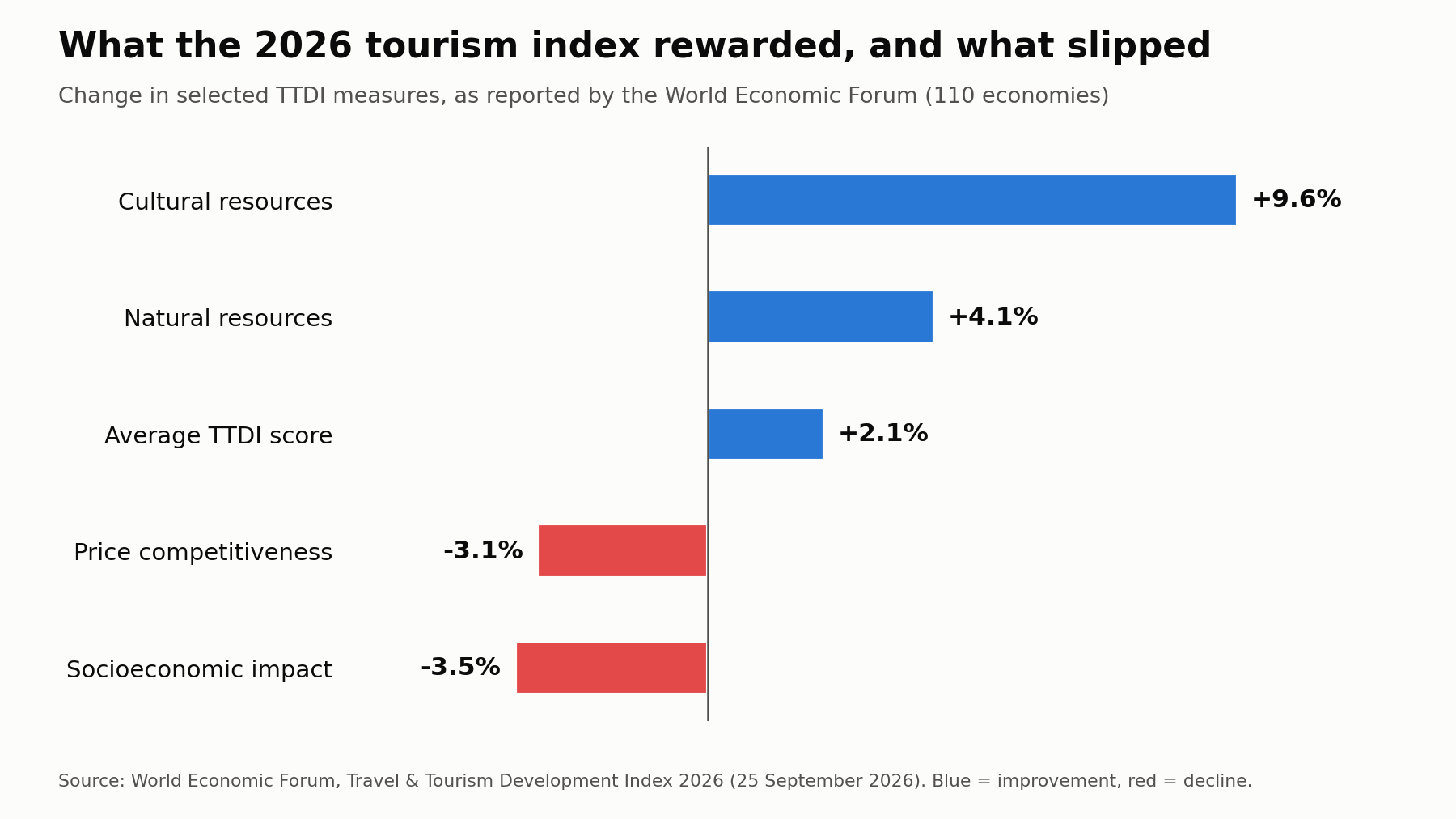
- 92% of economies improved. 101 of the 110 countries raised their score between 2024 and 2026. The average score rose 2.1%, the fastest pace since 2019.
- 1.5 billion international arrivals in 2025. A record year for global travel.
- Japan leads. It is followed by the United States, Spain, Australia and France. Advanced economies hold nine of the top ten places, and Europe is the highest-performing region overall.
- Culture grew fastest. Cultural resources rose 9.6%.
- Nature is next. Natural resources rose 4.1%, and the report notes nature-based travel spreading into rural areas.
- Affordability fell. Travel became less affordable in around 75% of economies.
- Local benefits weakened. The socioeconomic impact measure slipped 3.5%, and crowding stays above pre-pandemic levels in many places.
What the numbers say about slow travel
I am a local guide, so I read every statistic as a story about a place. Three stories stand out.
1. Culture and nature are what people now travel for
When cultural resources and natural resources lead the growth, travellers are telling us something. They want a place with a past and a landscape. They want a castle courtyard and a lake at dusk in the same weekend.
That is exactly what slow travel means to me. You stay longer. You see fewer things, properly. You learn who built the church, then you walk to the lake behind it. In Frombork, for example, a single cathedral floor hides a mystery worth a whole trip.
2. Crowds and prices are the pressure points
When affordability drops in three quarters of countries and crowding stays high, the famous places get harder to enjoy. Queues, high prices, tired locals. Many of you feel this already.
Slow travel is a practical answer. Travel in shoulder seasons. Choose a region, not a checklist, and start with my guide to slow travel in Poland beyond the tourist trail. Spend your money with family-run guesthouses, village bakeries and small farms. The money stays where you are standing.
3. Rural nature is having its moment
The report points to nature-based travel spreading into rural areas. For people burnt out by city life, that reads as permission. You do not need a flight to a famous skyline to reset. You need a quiet lake, a forest path and a few days without a schedule.
What this means if you are thinking about a slow business
If you are a remote worker who spends summers in the countryside, these numbers are worth a second read. The report says tourism growth has not always reached local communities, and that investment has lagged behind demand. Those gaps are where small, well-run places matter.
A guesthouse with four rooms. A guide who knows one region deeply. A village bakery that opens for visitors. None of these needs to chase volume. They need a clear place, a good story and guests who stay longer. The index rewards exactly those assets: culture, nature and value that stays local.
I have no formula to sell you. The numbers simply point in a direction that looks promising for people who like building things at a human pace.
Why Warmia and Masuria fits this moment
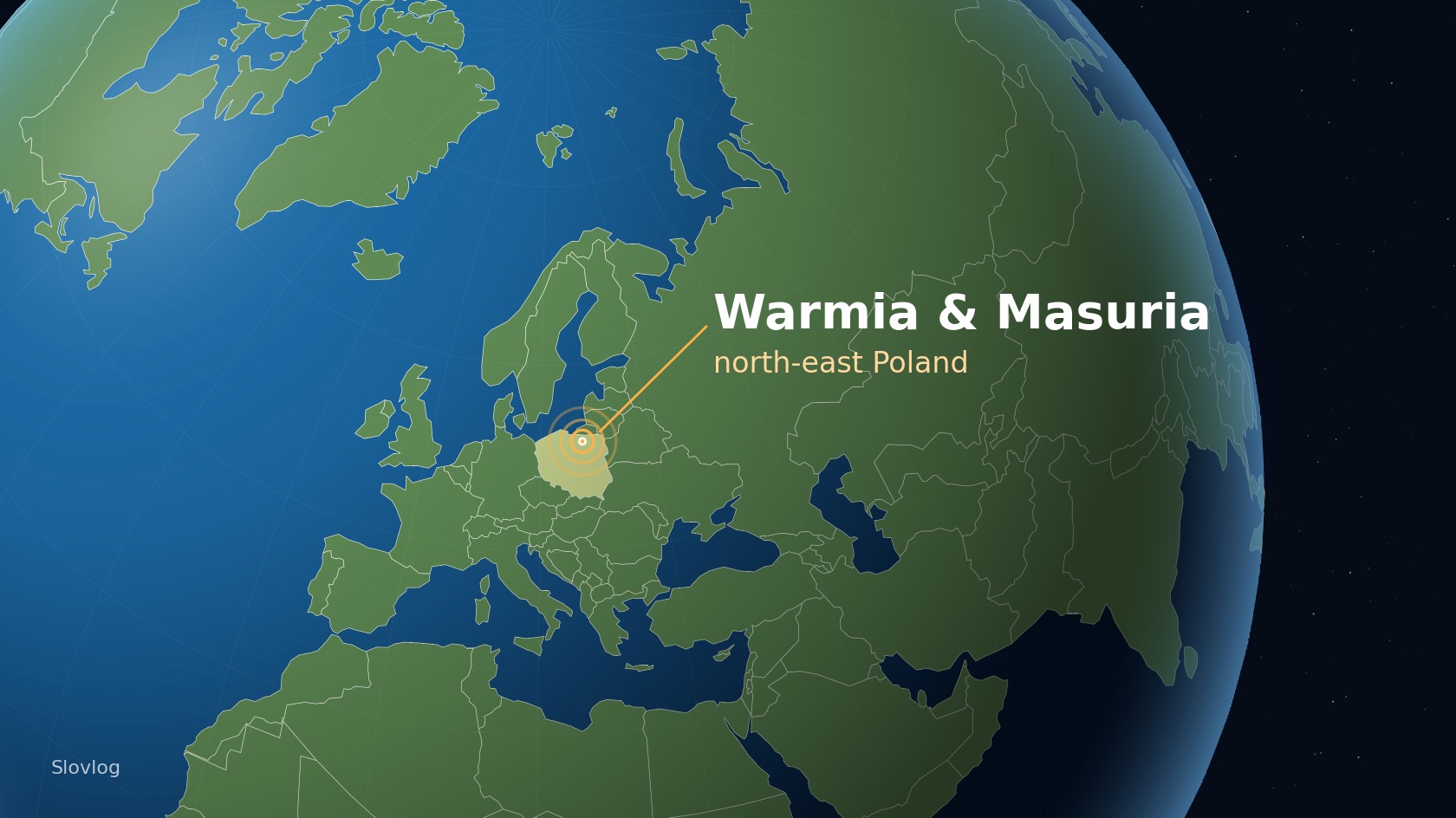
Warmia and Masuria sits in north-east Poland, and it is where I live and work as a PTTK-licensed guide. It has the two things the index rewards: culture and nature, side by side.
- Lakes and forests. Masuria is famous as the Land of a Thousand Lakes. Sailing, kayaking and quiet swimming are everyday things here. My Masuria lakes and forests guide is a good place to start.
- Brick castles and old towns. Warmia has Gothic castles, cathedral towns and village churches. Olsztyn, the regional capital, has an old town with a castle and forest close by.
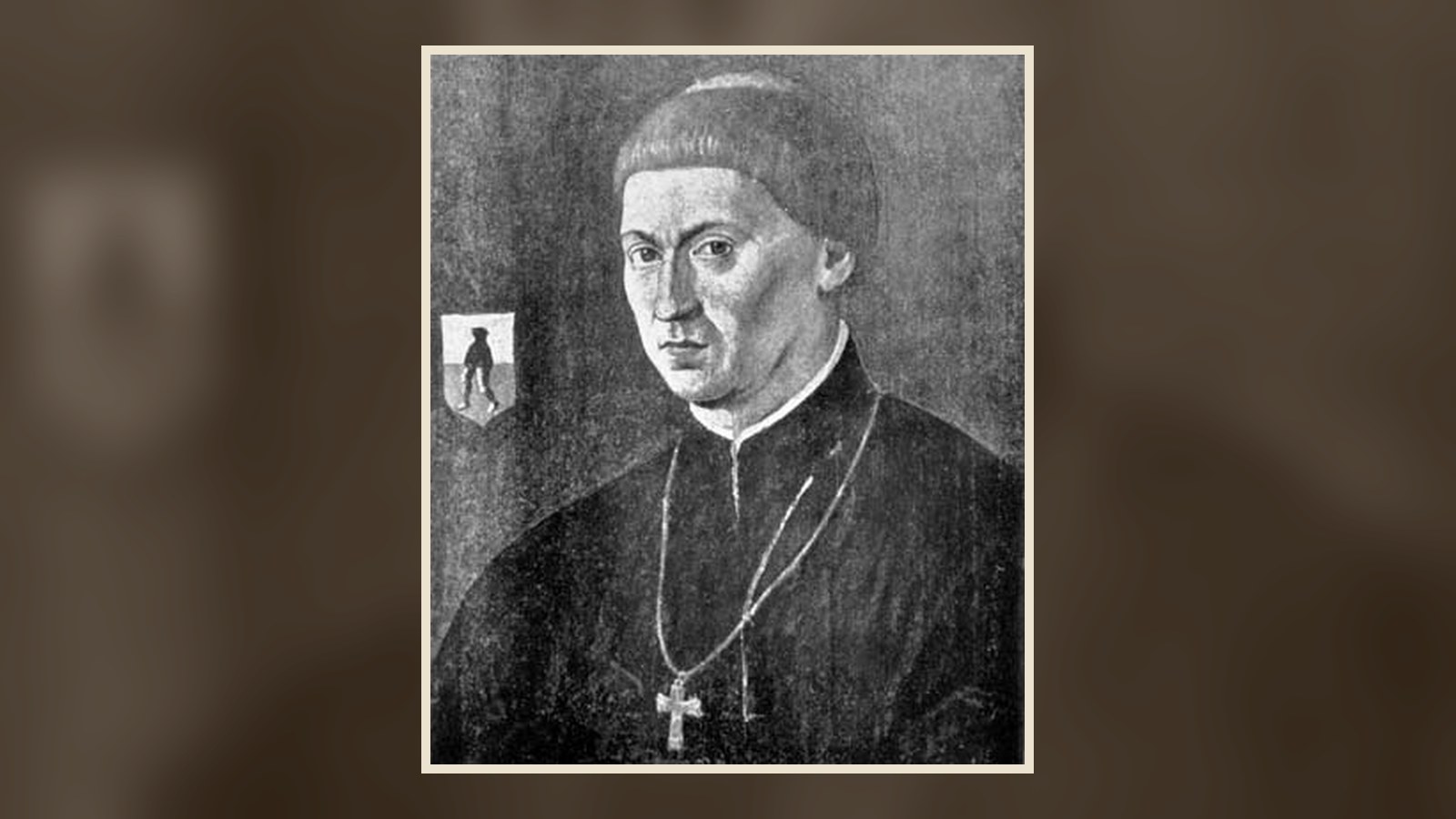
- A rich story. This is Copernicus country. If you like history with your landscape, read about Bishop Łukasz Watzenrode, the uncle who shaped Copernicus.
- Room to breathe. Villages are small, roads are quiet and the pace is gentle, which helps when the world is crowded.
A slow weekend in Warmia and Masuria, in five steps
- Pick one base. Stay three nights in one guesthouse or lakeside cabin, instead of moving every day.
- Give the morning to water. Kayak, swim or sit on a jetty with a coffee.
- Give the afternoon to history. Visit one castle, one church or one museum, and ask a local to tell you its story.
- Eat local. Smoked fish, fresh bread, forest mushrooms and lake-side cafés are all good answers.
- Leave space. Keep one slot empty. The best moments here are rarely planned.
My approach as a local guide
I do not build itineraries that rush you. I build days that have a beginning, a middle and a bowl of something warm at the end. My guided trips in Warmia and Masuria, led in English, follow the same rules the index points towards: fewer places, more story, and money that stays with local people.
If the WEF numbers show us anything, it is that the world is ready for this kind of travel. The places that have lakes, forests and real history, and that are not yet overcrowded, are the ones to visit now.
Frequently asked questions
What is the WEF Travel & Tourism Development Index 2026?
It is the tenth edition of a World Economic Forum benchmark that scores 110 economies on the conditions that support sustainable tourism growth. It uses 17 pillars and 102 indicators and was published on 25 September 2026.
Which countries lead the TTDI 2026?
Japan leads, followed by the United States, Spain, Australia and France. Advanced economies hold nine of the top ten places, and Europe is the highest-performing region overall.
What does the TTDI 2026 say about nature and culture tourism?
Cultural resources improved by 9.6% and natural resources by 4.1%, the two strongest gains among the measures highlighted. The report also notes that nature-based travel is expanding into rural areas.
Is travel getting more expensive?
According to the index, travel affordability declined in around 75% of the ranked economies between 2024 and 2026.
What is slow travel?
Slow travel means staying longer in fewer places, moving at a gentler pace, using local transport where you can, and spending money with local businesses.
Why is Warmia and Masuria good for slow travel?
It combines lakes, forests, Gothic castles and historic towns in a quiet part of north-east Poland, so you can mix nature and culture without crowds.
When is the best time to visit Warmia and Masuria?
Late spring and early autumn are calm, green or golden and less busy. Summer suits swimming and sailing, and winter suits quiet, cosy stays.
Can I book a local guide in Warmia and Masuria?
Yes. I am a PTTK-licensed local guide and lead trips in English. You can book a guided trip through the Slovlog contact page.
Come and see it for yourself
The index tells us where travel is heading. I would rather show you where it feels good.
Book a guided trip with me in Warmia and Masuria. Bring comfortable shoes, a swimsuit and no fixed schedule. I will show you the lakes, the forests and the stories of this region at a pace that lets you notice them. Book your guided trip and tell me what kind of slow you are after.
Want to read more first? Explore the Warmia & Masuria destination page.
Sources: