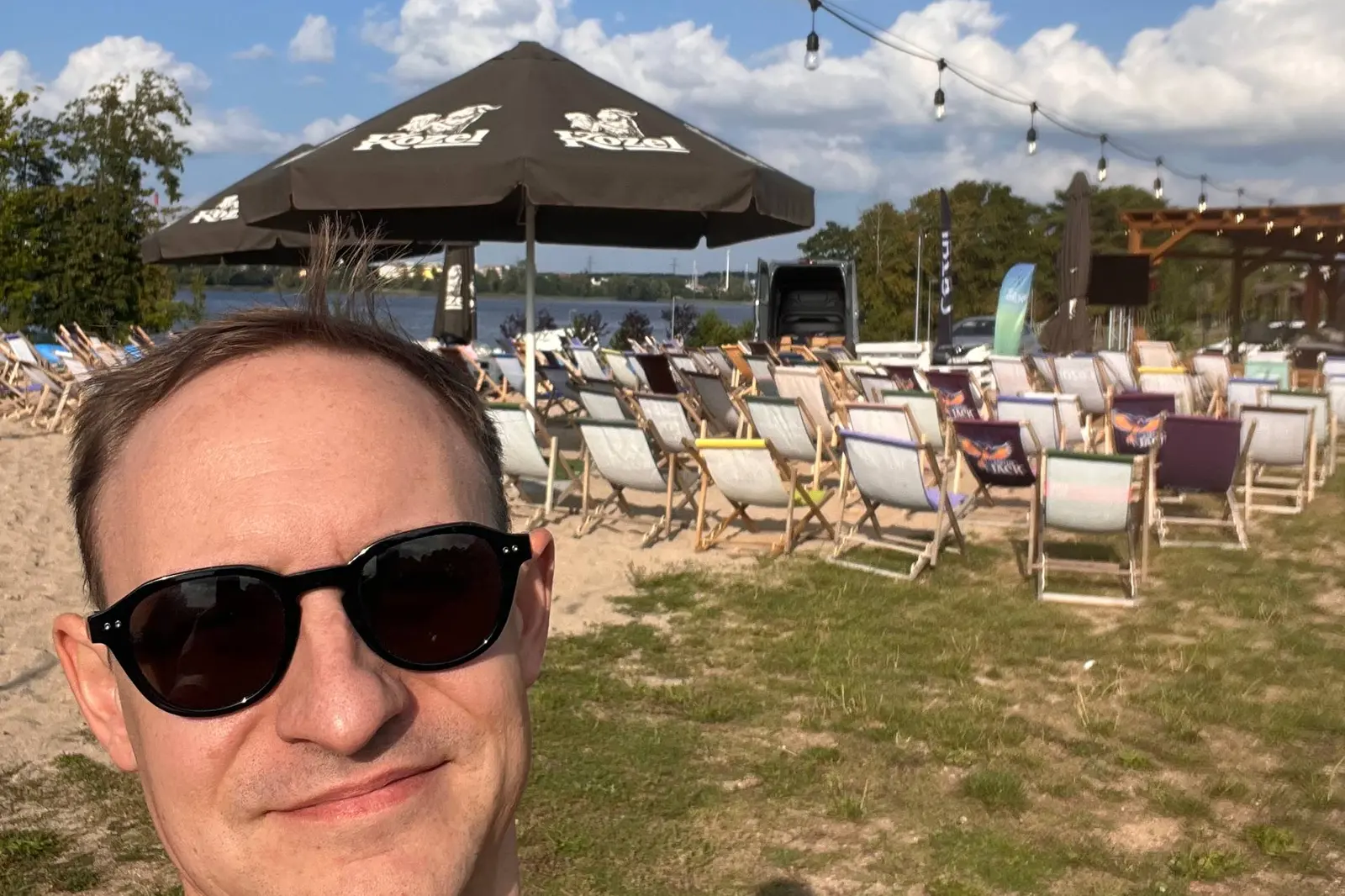
October is the better month to visit Masuria if you want the lakes rather than the crowds. The water is quiet, the forests turn gold, the cranes gather and you can sleep almost anywhere without booking months ahead. What you give up is swimming, most boat trips and long evenings.
On a Saturday in the middle of October I ate lunch on a wooden jetty in Pasym, on the shore of Lake Kalwa, and in the hour I sat there I saw two people. One was a man fixing a boat cover. The other was a woman walking a very old dog. In July, that same shore has towels on every metre of grass.
I am a licensed regional guide and I live in Olsztyn, so I see the Masurian summer from the inside. I love it, and I also tell almost everyone who asks me when to come that they should come in autumn instead. This article is the long version of that answer, including the parts that argue against me.
The day I rode home from Szczytno
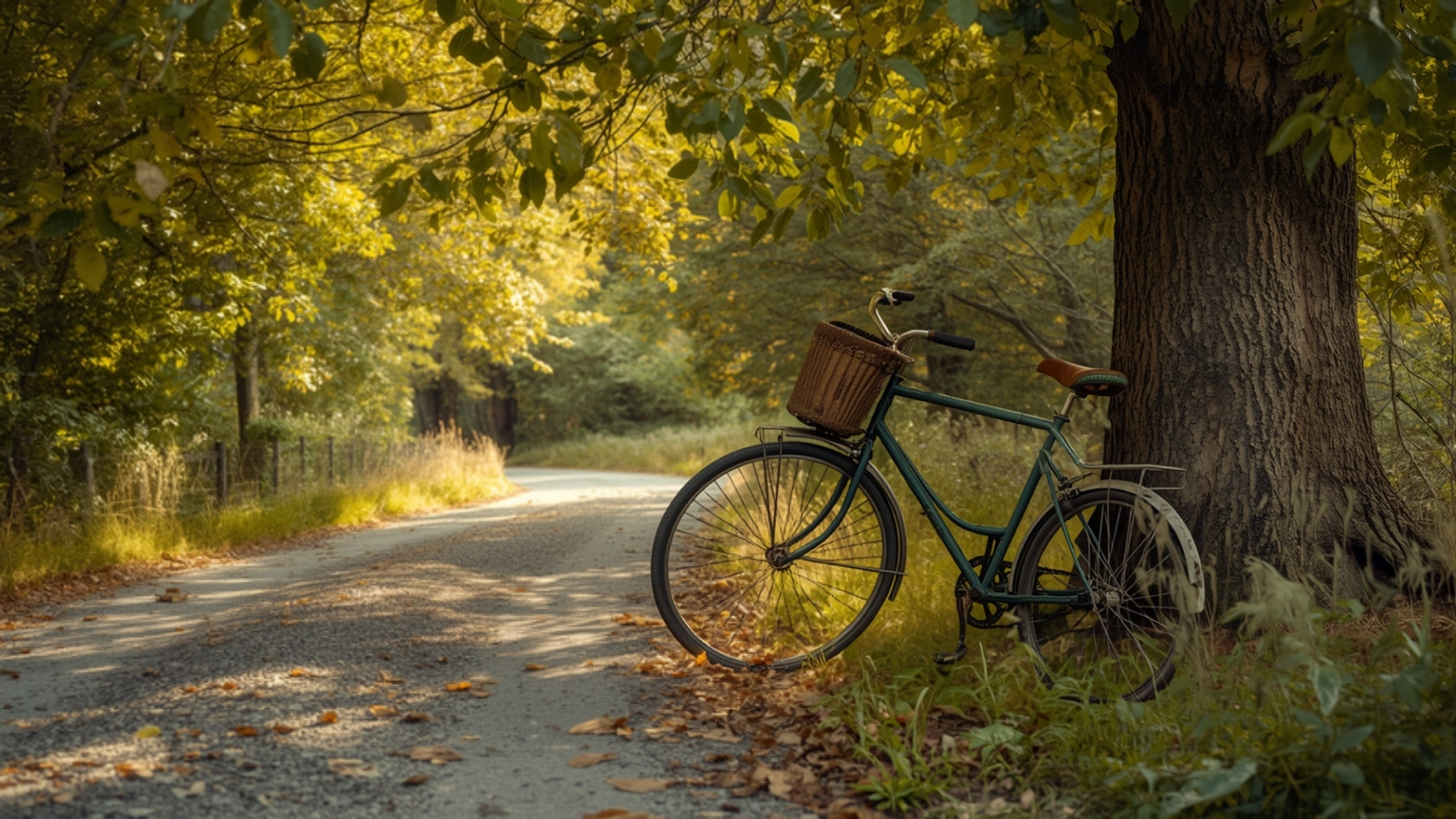
I had been looking at a cycling map of the forests south-east of Olsztyn for weeks. Szczytno sits about forty minutes away by regional train, on the line that also stops in Pasym, and there are quiet roads and forest tracks almost the whole way back. I had one free Saturday and about four hours of riding in my legs. That was the plan.
I took a mid-morning Polregio train from Olsztyn Główny with my bike. On regional trains in Poland you buy a separate ticket for the bike, a few złoty on top of your own fare, and you park it in the marked bike area at the end of the carriage. In summer those spaces fill up with cyclists heading for the lakes. On this Saturday there was one other bike, belonging to a teenager with headphones who got off two stops later.
Szczytno was cold and bright when I arrived. I started with a lap of Lake Długie, which has a paved path all the way round with a separate lane for bikes, and then turned north-west into the forest.
The next two hours were the reason I wanted to do this. Long straight forest roads under pines, the ground covered in brown needles, birches gone completely yellow, and every few kilometres a lake appearing through the trees, perfectly still. I passed through villages where the only movement was smoke from chimneys. A deer crossed the track ahead of me and stopped to look before it disappeared. It was rutting season, and somewhere deeper in the forest a stag was roaring.
In Pasym I stopped by the lake for lunch. Pasym is one of the small towns in the region that belong to the Cittaslow network, and in October you understand why without reading anything about it. I had smoked fish from a stall near the water, a piece of bread and a coffee from a thermos. Then the last stretch north towards Olsztyn, through more forest, with the light already getting lower at three o'clock.
The ride came to a little under sixty kilometres the way I went, and just over four hours on the bike. I kept off the main road between Szczytno and Olsztyn, which is busy and not pleasant to cycle on, and used smaller roads and forest tracks instead. Some of those tracks are sandy, so a trekking or gravel bike is a better choice than a road bike.
I got home with sand in my shoes and the feeling that I had seen the real Masuria, the one that summer hides.
What July actually looks like
I do not want to be unfair to summer. July and August in Masuria are wonderful if you like what they offer: warm water, sailing, open beach bars, festivals, long evenings. That is exactly why everyone comes then.
The numbers show how concentrated it is. According to the regional statistics office in Olsztyn, about 1.5 million tourists stayed in hotels, guesthouses and other places with ten or more beds across Warmia-Masuria in 2025. Occupancy in those places peaked at 51.6% in July and 52.2% in August, against 31.9% for the year as a whole. Those figures do not even count private rooms, holiday flats or yacht charters, which is where a large part of the summer crowd actually sleeps.
In practice, July means queues at the locks on the Great Masurian Lakes trail, marinas full by the afternoon, and towns like Mikołajki and Giżycko packed shoulder to shoulder on the promenades. Popular guesthouses book out months ahead. If you want a quiet lake shore in July, you can still find one, but you will need local knowledge or a canoe.
What October looks like
The first thing you notice is the silence. The boats are mostly gone from the water. The beach bars are shuttered. On the smaller lakes you can stand on a jetty for half an hour and hear nothing but water birds.
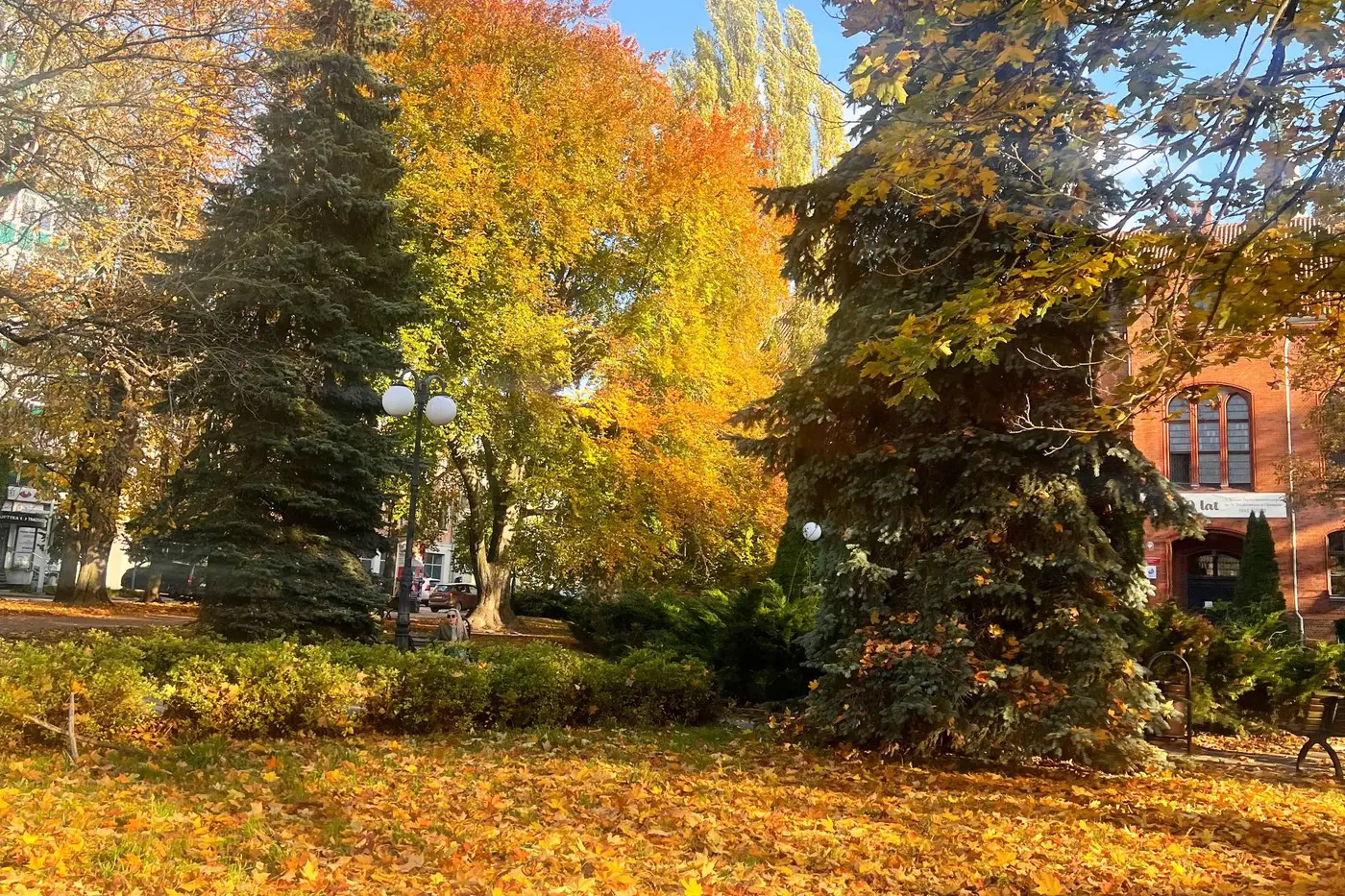
The second thing is the colour. The forests here are mixed, pine with birch, oak, maple and alder, and in October they turn in layers. On a sunny day the lakes reflect all of it, and the morning mist makes everything look like an old painting.
Then there is the wildlife. Cranes gather on the fields in their thousands before migrating, and National Geographic Polska puts the regional total at around 25,000 to 30,000 birds at the autumn peak. Deer rut in the forests in late September and early October, and if you walk at dusk you will hear them. Mushroom pickers fill the forest edges on weekend mornings.
Prices and availability change too. Charter companies who were fully booked a few weeks earlier suddenly have free yachts and houseboats, and the trips cost less than at the height of summer. The regional government has even started paying people to come out of season. In 2025 it ran an autumn tourist voucher covering stays from October to mid-December, and in 2026 a similar state-funded scheme covers stays in three windows between 30 September and 30 November. Check whether it is running, and whether you qualify, when you plan your trip.
For a slow traveller, October simply suits the way you want to travel. You can wake up without a plan, choose a lake on the morning, and find a room that evening. That freedom is what I was writing about in why slow travel matters more as tourism pressure grows, and it is why I think Poland is still one of the easier countries in Europe to travel slowly, as the WEF tourism index suggests from a different angle.
What closes, honestly
Here is the part most autumn articles skip. Some things do stop, and you should know which before you come.
| September | October | November | |
|---|---|---|---|
| Weather | Often warm, still swimmable early in the month for the brave | Cool, often bright, frosty mornings by the end | Grey, wet, first snow possible |
| Daylight | Long evenings at the start | Shorter fast, clocks go back on the last Sunday | Dark soon after four in the afternoon |
| Sailing and boats | Still busy, charters easier to get | Navigation marks on the Great Masurian Lakes start coming out around the 20th; locks on shorter hours | Effectively over |
| Tour boats | Summer timetables thin out | Few and irregular, check before you rely on one | Mostly stopped |
| Beaches | Most lifeguarded bathing areas close after the summer holidays | Closed | Closed |
| Forests and walking | Excellent | At their best | Wet but quiet |
| Wildlife | Cranes gathering, deer rut begins | Cranes and geese, rut, mushrooms | Late geese, quiet forests |
| Accommodation | Easier than summer | Easy, cheaper | Easy, some seasonal places closed |
A few specifics, so you can check them yourself. In 2025 the Wody Polskie water authority started removing navigation marks on the main Great Masurian Lakes route on 20 October. In 2026 the Guzianka II lock runs from 9:00 to 17:00 in October and the Karwik lock from 9:00 to 16:00, while the Przerwanki lock only opens on weekdays in September and October. If your trip depends on boats, plan for September rather than October.
Seasonal guesthouses, restaurants at the marinas and some small museums close or shorten their hours after the summer. In bigger towns like Olsztyn, Giżycko and Mrągowo you will always find somewhere open. In the small villages, ask ahead.
The five weeks I would pick
If I could choose only five weeks of the year to show a friend Masuria, I would choose roughly the middle of September to the third week of October.
The early part of that window still has warm afternoons and a few boats. The late part has the best colour, the cranes and the emptiest lakes. All of it falls before the clocks go back, so you still get usable evenings. Weekdays are better than weekends, because Polish families still come up for autumn weekends when the weather is good.
My ideal week in that window looks like this: base yourself in one place for the whole stay, rent a bike or bring one by train, walk or ride every morning, eat a long lunch somewhere by the water, and keep the evenings for reading and early nights. The Saturday I described above is a good one-day version of it.
When not to come
I would not send you here in October if you want to swim, sail every day or take boat trips between towns. Go in late August or early September instead.
I would not send you in November unless you specifically like grey, quiet places. After the clocks change, it is dark soon after four, rain is common, and many seasonal places close. I love November here, but I live here. As a visitor you might find it gloomy.
And if you depend on public transport, check the timetables carefully. Regional trains run all year, but some seasonal bus lines aimed at summer visitors do not.
My recommendation
Come in October, ideally in the first three weeks, on weekdays if you can. Stay in one place for at least four nights. Bring warm layers, waterproof shoes and a bike. Take one long day without a car, the way I did from Szczytno. And leave space in each day for doing nothing by a lake, because that is what this region is best at once the summer crowd has gone home.
If you want to see what the rest of the autumn here feels like, I kept dated notes from September to the first frost in Slow Living in Autumn: Field Notes from Warmia. For planning the region as a whole, start with Discover Masuria and slow travel in Poland's hidden gems.