In Portofino there is a stretch of quay where standing still between half past ten in the morning and six in the evening can cost you €270.
The offence is lingering. The town introduced the fine because the harbour had turned into a queue of people waiting to photograph the same row of painted houses, and the queue had stopped moving.
I think about that fine a lot, because it is the clearest thing anyone in European tourism has said out loud in years.
Europe is, by most measures, the best place on earth to be a tourist. The World Economic Forum's Travel & Tourism Development Index ranks it the highest-performing region in the world, and I went through what that index actually found in detail when it came out. Europe has the airports, the trains, the hotels, the cathedrals, the coastline and the safety. On paper it is finished.
The same report says travel became less affordable in roughly three quarters of the economies it covers, that the share of tourism's benefit reaching local people fell, and that crowding sits above where it was before the pandemic.
Those two findings come from the same fact, seen from two ends. Europe got very good at receiving visitors, and the places receiving them started to buckle.
What the Index Measures, and What It Does Not
The TTDI is a readiness score. It asks whether a country has the infrastructure, the connectivity, the natural and cultural resources, the safety and the policy environment to grow tourism sustainably. It is a good instrument and it does what it claims.
What it cannot tell you is what a place feels like in August. A region can score brilliantly on air connectivity and cultural resources precisely because it is receiving more people than it can comfortably hold. Readiness and liveability pull apart at the top of the scale, and Europe is at the top of the scale.
So I read the index as a map of capacity. The countries at the top are the ones most able to absorb visitors, and mostly the ones already absorbing the most.
What European Cities Are Actually Doing
The clearest evidence of the strain is not in the index. It is in what towns have started passing into law. These are real measures, collected by Euronews in its June 2025 round-up of European tourist restrictions. Several have changed since, so check the current rules before you travel.
- Portofino: a €270 fine for lingering on the quay between 10:30 and 18:00.
- Venice: a day-tripper fee of €5 to €10 on certain days, and tour groups limited to 25 people.
- Barcelona: daily cruise arrivals cut from ten to seven, and a plan to end short-term rentals by 2030.
- Santorini: cruise visitors capped at 8,000 a day, plus a €20 levy per cruise passenger in peak season (Mykonos has the same levy).
- Dubrovnik: a maximum of two cruise ships a day.
- Athens: the Acropolis capped at 20,000 visitors a day, with timed tickets.
- Amsterdam: ocean cruise ships barred from the city centre since July 2023.
- Málaga: no new tourist rentals in 43 neighbourhoods where they already exceed 8 per cent of homes.
Read that list again and notice what every measure has in common. Each one targets concentration: too many people, in one place, at one time, arriving by one method. The caps sit on a single site or a single way of arriving, and none of them touches the person who turns up in October and stays a week.
That distinction is the whole argument of this article, and it is good news if you were already inclined to travel slowly.
Concentration Is the Problem, Not Presence
A cruise ship puts four thousand people onto a quay in ninety minutes. They spend a median of very little, because they sleep and eat on the ship. They leave before dinner. The town absorbs the crowd and almost none of the money.
A person who arrives by train on a Tuesday in October, stays nine nights, eats in the same two places, and buys a coat from a shop on a side street is a completely different event in that town's year. Same visitor count of one. Entirely different effect.
This is what the index's fall in socioeconomic impact is measuring, in aggregate. Tourism grew. The share of it that landed in local hands shrank. Volume went up and the quality of the arrival went down.
Which means the slow traveller is doing what the data says these places need: arriving in shoulder season, staying longer, moving less and spending locally. The pleasant atmosphere is a bonus.
The Number That Should Worry You Most
Of everything in the index, the figure I keep returning to is the fall in socioeconomic impact. That measure asks how much of tourism's value reaches the people who live in the destination: wages, local ownership, employment that lasts past September.
It went down while everything else went up. Visitor numbers hit a record. Scores improved almost everywhere. And the share landing locally shrank.
That gap is where the anger in European tourist towns is coming from. Residents do not dislike visitors. What they notice is a record season arriving while their own rent has risen, their neighbour has moved out, the bakery has become a souvenir shop, and the money has gone somewhere they cannot see.
Barcelona cut daily cruise arrivals from ten to seven because 4,000 people stepping off a ship for six hours produce a lot of pressure and very little wage.
What This Means If You Are Thinking About Leaving
A good share of the people who read this site are not planning a holiday. They are quietly working out whether they could live somewhere slower, and running the numbers on it.
The index is more useful for that than it looks. The regions with falling affordability and rising crowding are the ones where the arithmetic of moving has already broken: housing priced for visitors, local wages that have not followed, winters in which half the town shuts. Parts of southern Portugal, coastal Spain and the Italian lakes are the obvious examples.
The regions with capacity left are where the arithmetic still works, and they tend to be the unglamorous ones. I made that move myself and wrote up the gap between the version that gets photographed and the version you actually live in, because the distance between them is larger than anyone selling it admits.
If you are weighing that decision yourself, Discover Slow Living: Your Escape Plan is a 50-page workbook of exercises, experiments and checklists. And if you want to test the idea before committing, trying the countryside for one season is a gentler first step.
How I Plan a European Trip Now
Four rules, arrived at mostly by getting it wrong first.
Pick the month before the place. The same town is two different towns in July and in October. I now choose when I can travel, then choose where that timing makes sense, rather than fixing on a destination and accepting whatever August does to it.
Count the bases, not the sights. One base per three nights, minimum. The thing that ruins a European trip is the transfer day, and the thing that fills a trip with transfer days is a list of places you felt obliged to see.
Go one stop further than the famous one. It does help you avoid crowds, and the better reason is that smaller places are where the money you spend actually stays, and where someone will still talk to you in October.
Let one day have nothing in it. The day with no plan is reliably the one I remember, and it is the hardest to keep. I wrote about what that looks like in practice across a whole year, and the empty day was the item I defended hardest.
Where This Leaves the Quieter Half of Europe
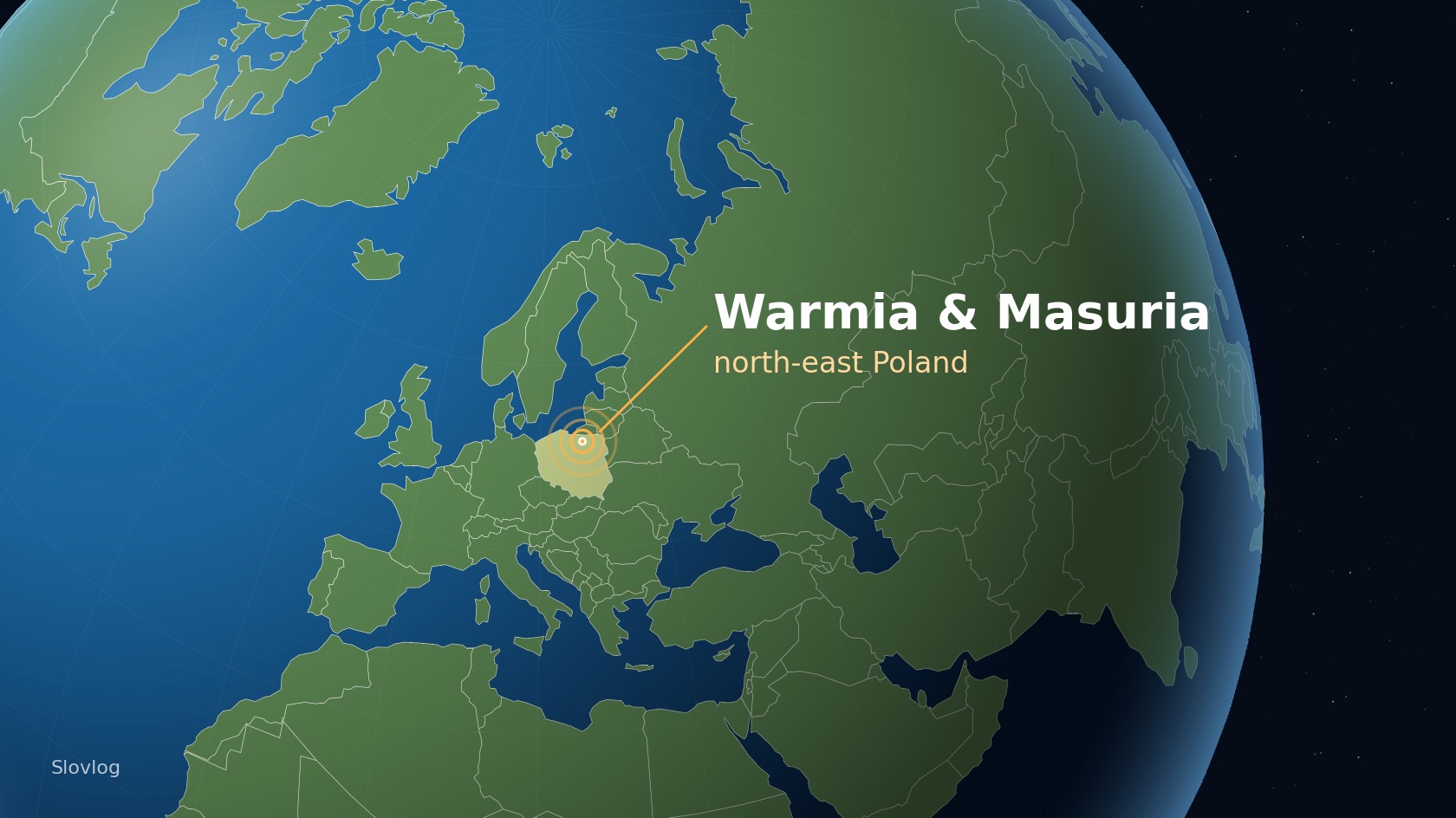
The parts of Europe nobody has written restrictions for are the parts with capacity left. North-eastern Poland is one of them. So are large stretches of the Baltic coast, inland Portugal, the Italian Apennines, Slovak and Romanian hill country, most of Latvia.
I live in one of them. Warmia and Masuria has somewhere around 2,600 lakes, brick Gothic towns that predate most of what visitors queue for further south, and an October in which you can walk a lakeshore for two hours and meet four people. The region guide is here if you want the practical version, and the quieter corners of Poland is the wider one.
I am not going to pretend that is a neutral recommendation. I run tours here and I have an obvious interest in you coming. What I will say is that the index and the fines are pointing in the same direction, and that direction is away from the places that have already been found.
There is a real tension in writing this down, and it is worth naming. Publishing quiet places is how quiet places stop being quiet. The honest answer is that the pressure arrives either way, and that a region which learns to receive slow visitors before it receives fast ones ends up with a better version of the trade.
Frequently Asked Questions
Which part of Europe is best for slow travel?
The parts with spare capacity: north-eastern Poland, the Baltic states, inland Portugal and Spain, the Italian Apennines, and rural Slovakia and Romania. The usable test is whether the local authority has had to pass visitor restrictions. Where no caps, levies or rental bans exist, the place can still absorb you comfortably.
Is Europe getting more expensive to travel in?
Yes. The Travel & Tourism Development Index found affordability fell in roughly three quarters of the economies it measured. City tourist taxes, cruise levies and entry fees have been added in many destinations since 2024, and accommodation costs have risen fastest in the cities already under the most visitor pressure.
What is overtourism and how do I avoid contributing to it?
Overtourism is concentration rather than volume: too many visitors in one place, at one time, arriving by one method. You avoid contributing to it by travelling outside peak months, staying several nights in one base rather than passing through, avoiding cruise-led day visits, and spending with independent businesses rather than chains.
Do tourist restrictions mean visitors are unwelcome?
No. Almost every European measure introduced so far targets day-visitor surges, cruise arrivals and short-term rental density rather than visitors in general. Towns that cap cruise ships still want people who stay, eat and spend locally. The restrictions are aimed at a pattern of arrival, not at tourism itself.
When is the best time to travel in Europe to avoid crowds?
Late September to early November, and late April to mid June. Both windows give you workable weather, full opening hours in most regions and a fraction of the peak-season crowd. In northern Europe the October light is the best of the year, and prices in that month are typically well below August.