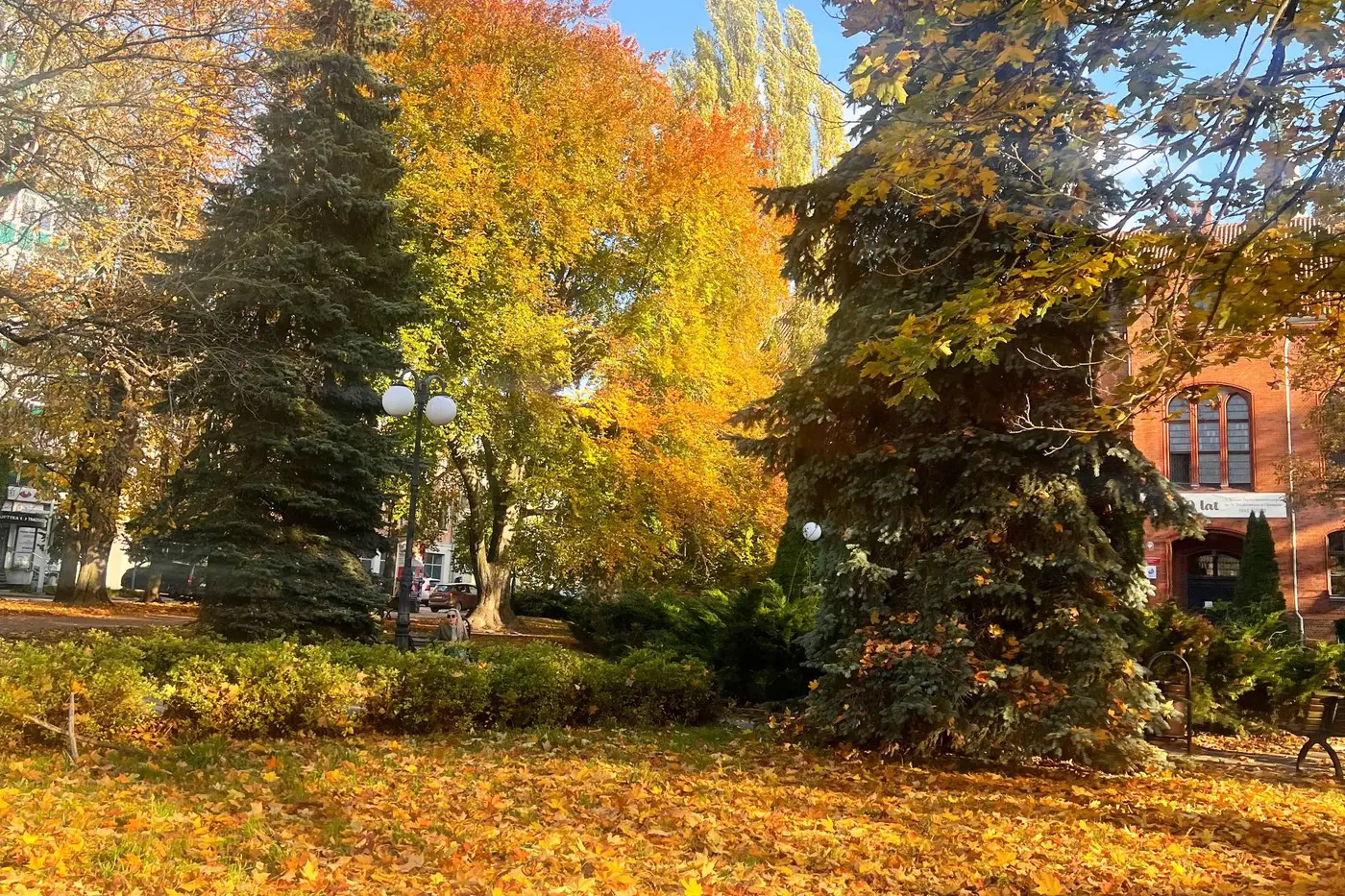
Slow living in autumn, here in Warmia, means using roughly six good weeks of September and October light on purpose, before three months of grey arrive. I keep it simple: get outside in daylight on weekdays, eat what the season gives, and accept that November will be dark by four.
Most autumn posts about slow living are about candles and blankets. Mine is about light, because in north-eastern Poland light is the thing you run out of. These are notes I kept this year, from early September to the first hard frost, with the place and the date at the top of each one. In between them are the practical parts: what actually changes, what is worth doing before the dark comes, and the mistakes I make every single year.
9 September · Lake Ukiel, Olsztyn
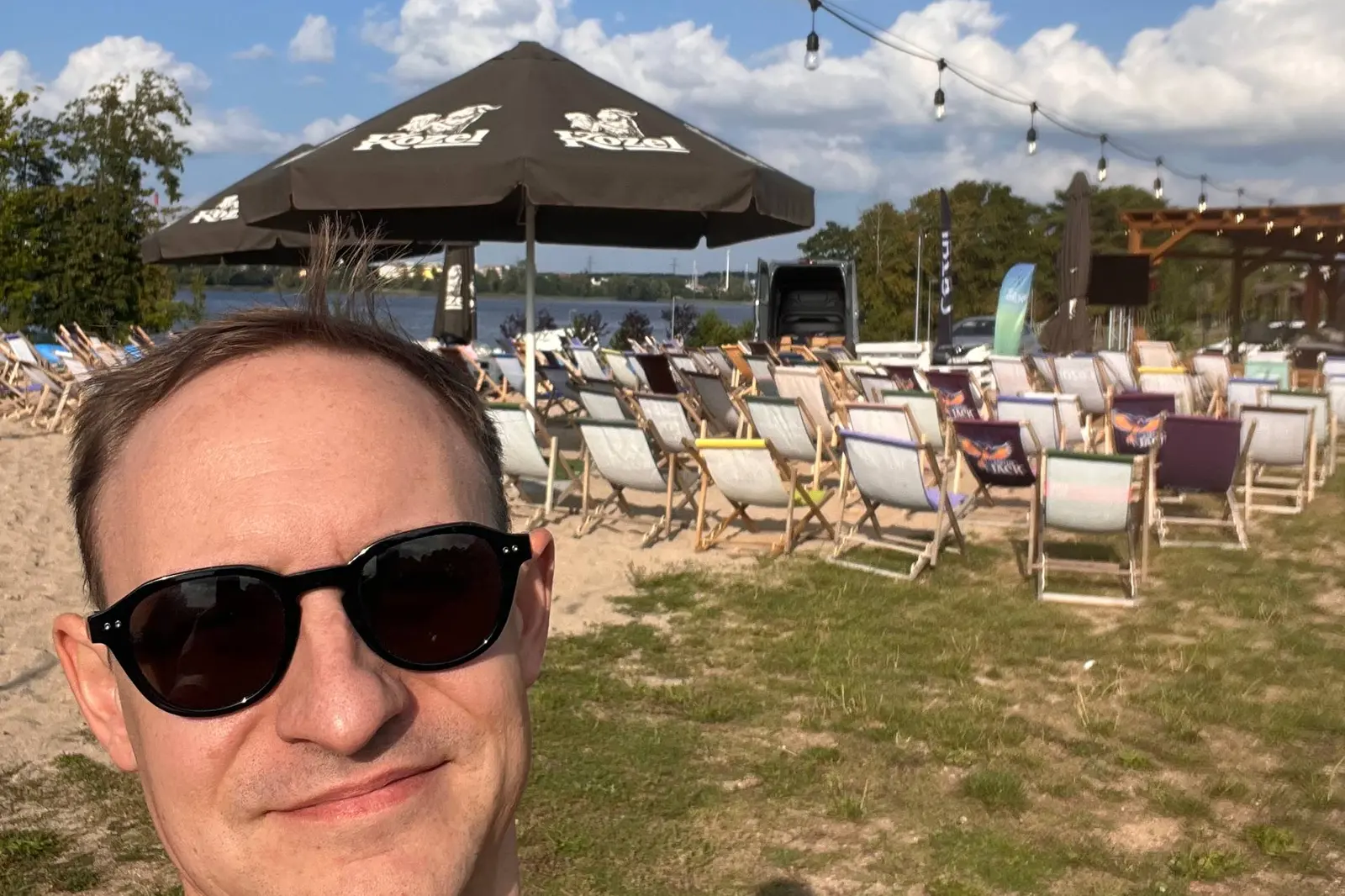
The water is still warm enough for a short swim if you are stubborn, and I am. Fewer people on the jetty than a week ago, and the ones who are here have stopped talking so loudly. School has started, so the afternoon belongs to dog walkers and old men with fishing rods.
What I notice first is the angle of the sun. In July it sits above your head and flattens everything. Tonight it comes in low across the lake and lights up the reeds from the side, so every stem has a gold edge. I sat on the end of the jetty until it dropped behind the trees, then cycled home with cold hands for the first time since May.
What actually changes in a Warmian autumn
Warmia does autumn in two halves.
The first half, from early September to about the third week of October, is the reason people fall in love with this region. Days are still long enough to do something after work. The forests turn slowly, birches first, then the oaks and maples along the old Prussian avenues. Mornings bring mist off every lake, and the cranes start gathering on the stubble fields before they leave. National Geographic Polska puts the number of cranes in Warmia and Masuria at the peak of the autumn migration at around 25,000 to 30,000, and you hear them long before you see them.
The second half starts when the clocks go back on the last Sunday of October. Overnight, the evening walk you were taking at half past five happens in the dark. November in Olsztyn is mostly low cloud, wet leaves and light that never fully arrives. It is beautiful in its own way, but you have to work for it.
The practical consequence is simple. Whatever you want to do outside this autumn, do it before the clocks change. After that, your outdoor life moves to weekends and lunch hours.
Food changes too. The markets fill with apples, plums, squash and late tomatoes, and mushrooms appear in baskets at the roadside. If you want to eat this way through the year, I wrote about seasonal eating and why it matters.
23 September · Lake Dadaj, near Biskupiec
This is the entry I keep coming back to.
It was a Wednesday. I was three hours into a client report, the kind with forty tabs open and a deadline that was not really urgent but felt urgent. Around two o'clock the light coming through my window turned that thick, honey colour it only has in September, and I realised I had not been outside since the morning coffee.
So I closed the laptop. I did not finish the paragraph. I drove about 25 kilometres east to Lake Dadaj, one of the biggest lakes in Warmia, roughly a thousand hectares of water with a long, broken shoreline and small wooded islands. In July its beaches are full. On a September Wednesday I met one man with a dog and a heron that did not care about either of us.
I walked the shore for an hour. The water was flat and the colour of pewter, with the first yellow birch leaves floating on it. Nothing happened. That was the point.
On the way back I stopped in Biskupiec, a small town that has been part of the Cittaslow network of slow towns for years, and ate a plate of dzyndzałki. They are Warmian pierogi, small and folded with long pinched ears, which is where the name comes from. There are two classic versions: one with raw beef, beef fat, onion and marjoram, and one with buckwheat and crisp bits of bacon fat, called dzyndzałki z hreczką i skrzeczkami. I had the buckwheat ones. They are heavy, salty, a little smoky, and exactly what you want after an hour of wind off the water.
I got home before six and finished the report in forty minutes. It was better than the version I had been forcing at two o'clock. I wish I could say I learned this lesson once, but I relearn it every autumn.
27 September · Fields near Barczewo
Cranes at dusk. I heard them first, that rolling trumpet call that carries for kilometres, then saw a line of maybe sixty birds coming in low over a harvested field to settle for the night. I stood by the car with the engine off until it was too dark to see them. A farmer drove past on a tractor and did not even look up, which tells you how normal this is here.
Five things worth doing before the light goes
These are the things I try to fit into September and the first half of October, before the clocks change. None of them costs much.
- Take one weekday afternoon off and go to a lake. Weekends are fine, but a weekday afternoon in an empty landscape feels like a small rebellion, and that feeling lasts for days. Lake Dadaj, Lake Wadąg and Lake Wulpińskie are all within about 25 kilometres of Olsztyn.
- Watch the cranes at least once. Go to open farmland at dusk in late September or early October and listen. You do not need a hide or binoculars to feel it.
- Eat the regional food while it is in season. Dzyndzałki, smoked fish from the lakes, apples from old orchards, mushroom soup. It is the cheapest way to feel at home in a place.
- Do one longer trip without a car. In October I took a train out with my bike and rode back to Olsztyn. I wrote it up in Masuria in the off-season: why October beats July.
- Store some light. Pick one evening walk route you can still do in November, and walk it now while it is bright, so it already feels familiar when it is dark.
4 October · Forest south of Olsztyn
Mushroom morning with a basket I borrowed and never returned. The forest floor smelled of wet pine needles and something sweet underneath. I found a handful of bay boletes and one slippery jack, which is a modest haul by local standards. An older woman with a full bucket walked past, looked into my basket, and said nothing in a way that said a great deal.
I go mushrooming mainly for the walk. If you are new to it, go with someone who knows, and never eat anything you are not certain about.
17 October · The road from Szczytno
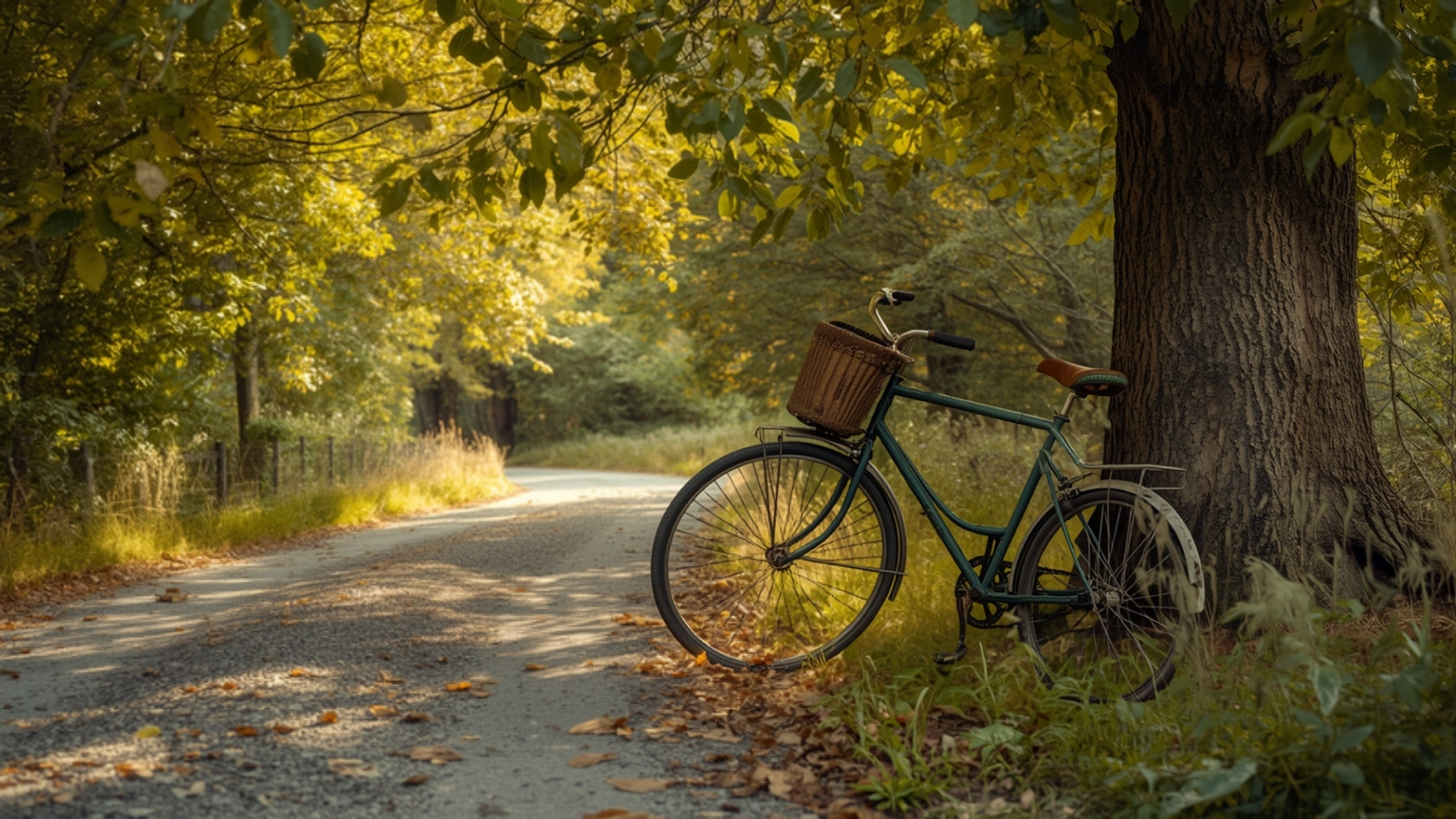
The bike day. Train out, sixty-odd kilometres home through Masurian forest, lunch by a lake in Pasym. The whole story is in the October article linked above. The short version: I came home tired in the good way, with sand in my shoes and the feeling of having used a whole day properly.
25 October · Olsztyn, the first dark evening
Clocks went back last night. At ten past four I looked up from my desk and the sky was already turning blue-grey over the rooftops. By the time I had my shoes on, the street lights were on.
I walked anyway, the same loop I had been walking all month, past the castle and down along the Łyna river. It was a different walk. Quieter, more inward. I could see into lit kitchen windows, people cooking, a child doing homework. Autumn in the second half is more about other people's warm rooms than about landscapes.
What I get wrong every year
I wait for the perfect day. In September there is always a better day coming, until suddenly there is not. The afternoon at Dadaj happened because I stopped waiting.
I fill October with work because the calendar looks empty. Clients come back from summer, projects restart, and every free slot gets booked. Then it is November and I realise I spent the best weeks of light indoors. These days I block two afternoons in my calendar before anyone else can take them.
I let the phone eat the dark evenings. When it gets dark early, the easiest thing is to sit on the sofa and scroll. If that sounds familiar, the free Attention Leak Audit is a short worksheet that shows you where those evenings actually go.
I forget that grey is normal. Every November I feel low for a week and act surprised. It is the same every year. Light lamps early, get outside at noon when there is any brightness at all, and see people.
1 November · All Saints' Day, Olsztyn
Wszystkich Świętych, All Saints' Day. In the afternoon the cemeteries fill with families carrying chrysanthemums and glass candle lanterns, and by dusk the whole cemetery glows red and amber. Thousands of small flames, people standing quietly at graves, some talking in low voices, children holding their grandparents' hands.
It is the most slow-living day of the Polish year, and nobody here would call it that. You visit your dead, you stand still, you think about where you come from. Then you go home and eat together.
4 November · Olsztyn, first proper frost
White roofs this morning, and a thin crust of ice on the car. The last leaves on the lime trees came down in one night. The first half of autumn is over.
I am not sad about it. I used September and October better this year than most, and that makes November easier to accept. If you want to see more of this region before the dark settles in, Discover Masuria is a good place to start planning for next year.
In the end, slow living in autumn comes down to one decision you make in September, which is whether you use the light or let the weeks fill up by themselves. If there is still a bright afternoon left where you are, close the laptop in the middle of a paragraph and go and sit by some water.