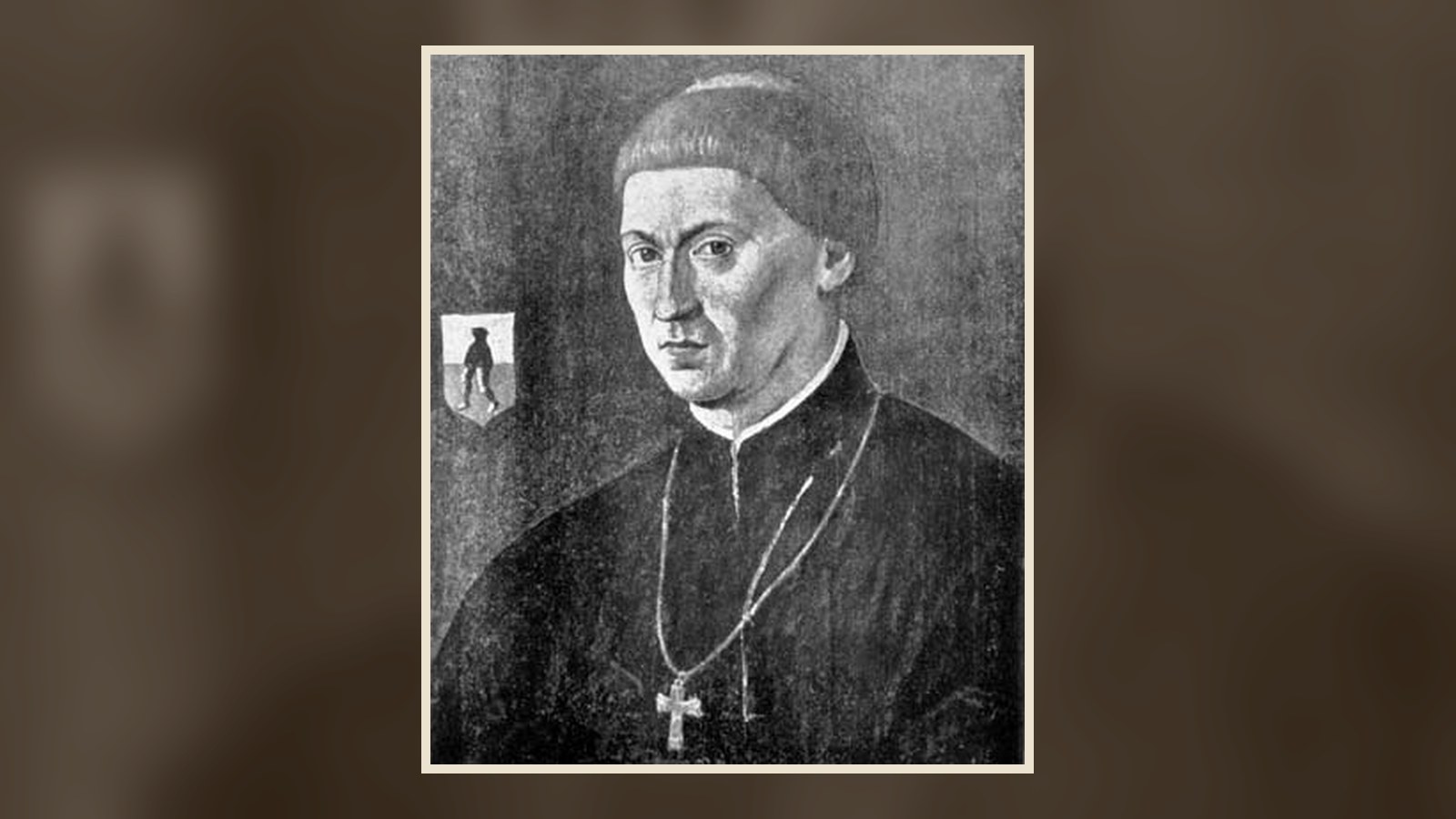
The king refused to say his name. For years, Casimir IV of Poland called him only "a certain Łukasz from Toruń." The man in question kept the bishop's chair anyway.
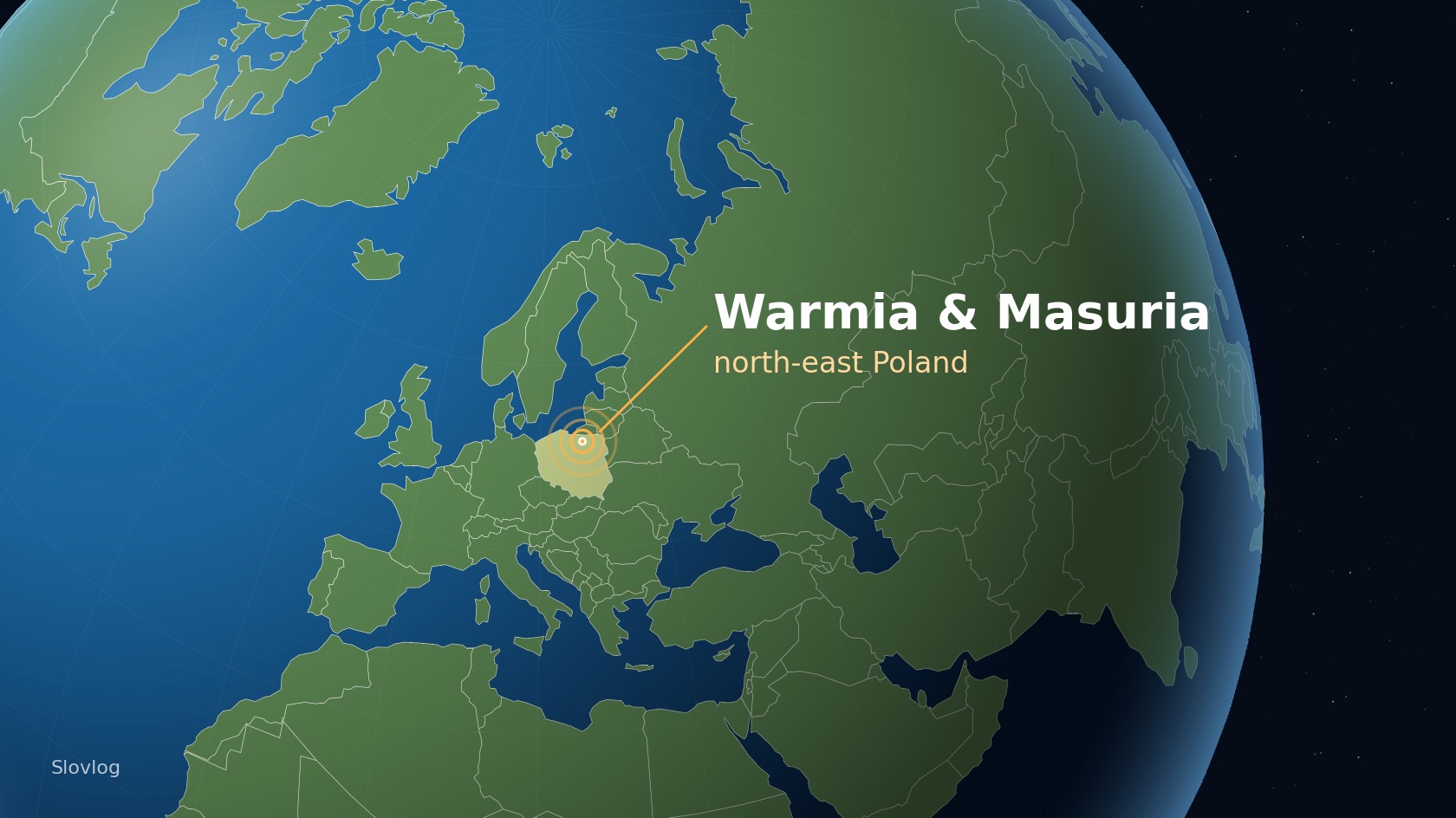
Łukasz Watzenrode (1447–1512) was the Prince-Bishop of Warmia, the man who ruled a small church-run state in northern Poland from 1489 until his death, and the uncle who paid for the education of Nicolaus Copernicus. He fought a king, argued with the Teutonic Knights, built up the bishops' castles and left behind a trail of objects you can still see in Warmia today. His grave is still missing. Archaeologists reported in September 2026 that they have not found it yet.
I guide in this region, so I keep coming back to him. He is one of those people history books squeeze into a single sentence ("Copernicus's uncle"). The full story is better.
Who was Watzenrode? The quick version
- Born: 30 October 1447, Toruń (Thorn)
- Died: 29 March 1512, Toruń
- Role: 16th Prince-Bishop of Warmia, 1489–1512
- Seat: Lidzbark Warmiński (Heilsberg)
- Famous nephew: Nicolaus Copernicus
- Main rivals: King Casimir IV Jagiellon, the Teutonic Order, the city of Elbląg
- Buried: Frombork Cathedral, exact spot unknown
Hard words, in plain English
Medieval church politics comes with vocabulary. Here is the short list you need.
- Prince-bishop: a bishop who was also a secular ruler. Watzenrode led the church in Warmia and governed its land, towns and castles.
- Cathedral chapter: the council of priests attached to a cathedral. In Warmia, the chapter elected the bishop.
- Canon: a member of that council. Canons received a steady income (a "prebend") from church property.
- Canon law: the law of the Church. It was the standard degree for ambitious churchmen.
- Teutonic Order: a military-religious order that ruled a large state around the Baltic, with Malbork and, later, Königsberg as major centres.
- Metropolis or archdiocese: a senior church province led by an archbishop, with smaller dioceses under it.
A merchant's son from Toruń
Łukasz was born in Toruń, a rich Hanseatic trading town on the Vistula, into a merchant family that was comfortable but not grand. His father, also Łukasz, sold goods. His sister Barbara married a Toruń man named Niklas Koppernigk. Their son, born in 1473, became the astronomer we know as Copernicus.
Watzenrode studied in Kraków, then Cologne, where he earned a master's degree, and finally Bologna, where he took a doctorate in canon law. For a boy from a merchant house, that was a serious education. It also explains his later habits: he read, he collected books, and he thought in terms of law.
Here is a small detail I like. Neither Watzenrode nor his nephew finished a degree in Kraków. Both moved on to universities abroad. In this family, Kraków was the first stop.
The chapter of his life that most articles skip
As a young man, Watzenrode had a relationship with a 21-year-old townswoman, Elisabeth Rackendorff. They had a son, Philipp Teschner. At the time Watzenrode held a church post but had not yet taken holy orders, which softened how the Church treated the affair. He was ordained in 1478, and no further scandal follows him.
He did not abandon his son. A local citizen married Elisabeth and raised the boy, and Watzenrode kept an eye on Philipp through gifts and connections. Philipp became a citizen of Braniewo (Braunsberg), joined the town council and later became mayor. A bishop with a son, in a church that preached celibacy, is a very human detail. I include it on tours because it makes him a person.
The election that annoyed a king
This is the part of the story I enjoy telling most.
On 13 February 1489, Bishop Nicolaus von Tüngen of Warmia died. Six days later, on 19 February, the cathedral canons met in Frombork and elected Watzenrode as his successor. Watzenrode was not even there. He was probably not expecting the job.
Here is why the king was furious. After a long quarrel with Tüngen, King Casimir IV had signed the Treaty of Piotrków in 1479. It said the chapter should elect a bishop acceptable to the king. Casimir had his own candidate in mind: his young son Frederick, then about twenty. The canons chose fast, before the king could push, and news of Tüngen's death reached the royal court only after the vote.
Watzenrode's next move was bold. He did not wait in Warmia to be told no. He went straight to Rome. Pope Innocent VIII confirmed him on 18 May 1489, and he was consecrated as bishop there. A papal letter written in early June told the Polish king that the new bishop would be "an angel of peace" to him. Casimir was not soothed. From then on he referred to the bishop only as that Łukasz from Toruń.
Think about the position Casimir was in. The consecration could not be undone. He could accept the bishop or fight him, and by some accounts he seriously weighed a military response.
The long way home
By one account, Watzenrode did not hurry back to Warmia. He travelled for weeks by a roundabout route, through Gdańsk, carrying a load of books, while the king's officials waited for him on the direct road. It is a good story. Whether the books were for reading or for cover, nobody knows. He had a name as a book lover, though as I understand it his collection was personal and did not become the seed of the later bishops' library.
He finally rode into Frombork in 1489 and took possession of the diocese. Then he withdrew to the castle at Lidzbark and, by one account, skipped church feasts in Frombork for a while, wary of a royal assassin. The same account says he even let the Teutonic Order speak for him at the royal court, which is remarkable, because he was known as an enemy of the Order. Imagine a politician asking his fiercest opponent to plead his case. If true, it shows how exposed he felt.
Luck rescued him. In 1490, events in Hungary pulled Casimir's attention away, and the king pulled back his forces. In June 1492 Casimir died. His successor, Jan Olbracht, was crowned in Kraków in September 1492.
Watzenrode attended, and by one account he then made a small but costly mistake. Prussian lords insisted that Prussia be named separately from Poland, and during the coronation oath he heard the royal title read out without it and did not repeat the words. The new king noticed. He is said to have taken homage from another bishop first, and he sent Watzenrode's letters back. In 1494 the bishop travelled to Kraków and apologised in person. After that Jan Olbracht recognised him, and Watzenrode became one of the king's main advisers on the Teutonic Order.
A bishop in his castle
Lidzbark Warmiński was the political heart of Warmia. The Gothic bishops' castle there is among the best-preserved medieval residences in Poland. It has an arcaded courtyard and a chapel, and today it houses the Museum of Warmia and Mazury.
Watzenrode lived and governed here. He served as president of the Prussian Council, the assembly of Royal Prussia, which made him one of the most powerful men in the region. He held a diocesan synod in 1496. He strengthened the defences of Reszel castle. He also spent money on churches and art, and that is where his name still turns up.
You can trace his patronage in a handful of places:
- Lidzbark castle: a richly decorated liturgical cope linked to him and wall paintings dated around 1498–1500 from his time here. The museum also has a portrait of him. As I understand it, the colour portrait is a modern copy, painted from a black-and-white photograph taken in 1942, when a German museum was documenting objects it feared might be lost. The original has never turned up.
- Braniewo, St Catherine's church: he paid for the memorial to his predecessor, Bishop Paweł Legendorf, and the church has a gallery for choir singers that carries his coat of arms.
- Frombork Cathedral: a reliquary he funded, along with other liturgical objects.
- Lidzbark castle, again: a printed missal (a book of Mass texts) from 1497, which he bought. It is often called the "Warmian Missal", though it was not made specifically for Warmia. It is simply his copy.
Exhibitions change. Check what is on show before you plan a special trip.
The uncle behind Copernicus
When Copernicus's father died, Nicolaus was about ten. His uncle stepped in as guardian to Nicolaus and his brother Andrzej and paid for their education: Kraków first, then the universities of Bologna, Padua and Ferrara. In 1497 Nicolaus received a canonry at Frombork, a comfortable income that let him study for years.
Watzenrode wanted more than a well-educated nephew. He wanted a successor. In 1503, when Copernicus came home from Italy, the ageing bishop needed a personal physician, and Nicolaus moved into the Lidzbark castle. For roughly seven years he worked as doctor, secretary and adviser to the bishop.
Two details show the relationship was more complicated than a simple thank-you.
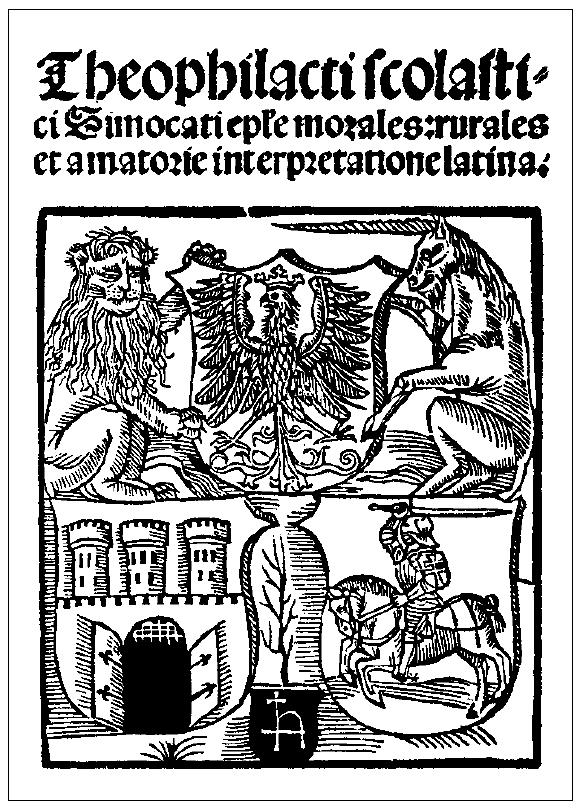
The 1509 dedication. Copernicus published his first book in Kraków in 1509: a Latin translation of Greek letters by the Byzantine writer Theophylact Simocatta. He dedicated it to his uncle. The letters mix moral advice, country scenes and love poems. Some guides read one rustic letter, about a shepherd who lounges while his flock scatters, as a wink at a bishop who wanted his nephew to take over the flock. I would not swear to it. It is a fun thing to point out.
The map. In 1510 an international congress in Poznań, with delegates of the emperor and the kings of Bohemia and Hungary, discussed how to make the Teutonic Grand Master pay homage to the Polish crown. Copernicus prepared a map of the region for it. A Warmian canon, Fabian Luzjański, tried to get hold of that map to pass to the Teutonic Order. Luzjański later became bishop of Warmia himself. Yes, really.
Copernicus moved to Frombork around 1510. He never became bishop. He chose the tower and the sky over the crozier.
What Watzenrode did not achieve
He was a shrewd politician who lost most of the big battles.
- He wanted to move the Teutonic Order out of Prussia. In 1495 he proposed relocating the Knights to Podolia to fight Tatar and Ottoman raids, with their Prussian lands going to the Warmian bishopric. The Order refused.
- He wanted a Warmian metropolis, an archbishopric of his own. It did not happen in his lifetime.
- He did not become governor of Prussia.
- He planned a university at Elbląg. It stalled.
- His nephew did not succeed him.
The metropolis dream has a happy ending, nearly five centuries late. On 25 March 1992, Warmia was raised to an archdiocese. I like that his idea finally arrived.
The last road and the missing grave
In January 1512 Watzenrode left Lidzbark for Kraków to attend the wedding of King Sigismund I. He never saw Warmia again. On the way home he fell seriously ill. One account says he ate spoiled fish during Lent. Rumour, unproven, blamed the Teutonic Knights. He reached Toruń in late March, the town where he was born, and sent a servant to Warmia to fetch Copernicus. The doctor did not arrive in time. Watzenrode died on 29 March 1512, after receiving the last sacraments.
He was brought to Frombork and buried in the cathedral. Nobody today knows exactly where.
That mystery is live. In 2025 and 2026, the Nicolaus Copernicus Foundation and researchers working on the Copernicus 2043 project examined the cathedral crypts. They recorded 101 burials, including six bishops, and what the team describes as the largest collection of burial vestments in Poland. In late September 2026 they said Watzenrode's remains were not positively identified. They took samples for genetic testing, and an anthropologist on the team suggested he may lie in the ossuary (the shared bone chamber) of the bishops' crypt.
A theory I have heard among guides is that there was once an older Gothic chapel near the cathedral, and that a bricked-up Gothic doorway in the attic hints at it. It is a guess. I mention it as a guess.
How we tell his story on the ground
Most visitors know Copernicus and none of the people around him. My job is to add a face.
I start with the scene in Rome, because it has a hook and an annoyed king. I keep dates few, because a page of numbers loses a group standing on a windy hill. And I say out loud which parts are firmly documented and which are colour from later retellings. The election, the papal confirmation and the death in Toruń are documented. The long road home with the books and the fear of an assassin are the kind of detail I flag as "the story goes."
If you have one day, this is the loop I would suggest:
- Olsztyn: Start at the castle where Copernicus later managed the defence during the Teutonic attack of January 1521.
- Lidzbark Warmiński: The bishops' castle. Give it a full morning.
- Braniewo: St Catherine's church and the Legendorf memorial.
- Frombork: The cathedral on the hill, the crypt story and the lagoon light in the late afternoon.
The whole thing is a long day by car, and it can be split over two. I run these routes in English and Ukrainian, in the Warmia and Masuria region, as a licensed PTTK regional guide. If you want the story told on site, get in touch.
One last thing. Watzenrode has, as far as I know, no monument. No statue, no square. He funded things that carried other people's names and pushed a nephew into the light, and the region remembers him mostly through what he made possible. If a slower, story-led day in Warmia appeals to you, take a look at the Slovlog store for what is new.
Frequently asked questions
Who was Łukasz Watzenrode?
Łukasz Watzenrode (Lucas Watzenrode, 1447–1512) was the Prince-Bishop of Warmia from 1489 to 1512. Born in Toruń, he studied at Kraków, Cologne and Bologna, ruled Warmia from Lidzbark Warmiński castle, and was the uncle and guardian of astronomer Nicolaus Copernicus.
Was Watzenrode really Copernicus's uncle?
Yes. Watzenrode's sister Barbara married Niklas Koppernigk, Copernicus's father. After the father died, Watzenrode became guardian to Nicolaus and his brother Andrzej and paid for their education in Kraków and Italy. Copernicus later worked for his uncle as physician and adviser at Lidzbark castle.
What is a prince-bishop, and what did Watzenrode rule?
A prince-bishop is a bishop who is also a secular ruler. Watzenrode governed the Prince-Bishopric of Warmia, a self-governing church territory in what is now north-eastern Poland, with its towns, castles and courts. It formed part of Royal Prussia under the Polish crown.
Why did King Casimir IV oppose Watzenrode?
Casimir IV wanted his own son Frederick to become Bishop of Warmia. The cathedral chapter elected Watzenrode on 19 February 1489 before the king could interfere, and Pope Innocent VIII confirmed him on 18 May 1489. The king refused to accept him until Casimir's death in 1492 and the accession of Jan Olbracht.
How did Łukasz Watzenrode die?
Watzenrode fell ill returning from King Sigismund I's wedding in Kraków in early 1512. One account blames spoiled fish eaten during Lent. A later rumour of poisoning by the Teutonic Knights is unproven. He died in Toruń on 29 March 1512.
Where is Watzenrode buried?
He was buried in Frombork Cathedral, but the exact location is unknown. Archaeologists examined the cathedral crypts in 2025 and 2026, found 101 burials including six bishops, and took samples for genetic testing. As of late September 2026 his remains had not been positively identified.
Where can I see traces of Watzenrode in Warmia today?
Visit the bishops' castle in Lidzbark Warmiński (portrait, a liturgical cope and wall paintings from his time), St Catherine's church in Braniewo (the Legendorf memorial and a gallery bearing his arms) and Frombork Cathedral (a reliquary he funded). Exhibitions change, so check before you travel.
Did Watzenrode have children?
Yes, one known son, Philipp Teschner, born of a relationship with Elisabeth Rackendorff before Watzenrode was ordained a priest in 1478. Philipp was raised by a local citizen, became a councillor in Braniewo and later its mayor.
Did Watzenrode want Copernicus to become a bishop?
Historians say he hoped one of his nephews would succeed him. In 1503 he brought Copernicus to Lidzbark as physician and adviser. Copernicus moved to Frombork around 1510 and pursued astronomy instead. He never became bishop.
How do you pronounce Watzenrode?
It is a German family name, so in Polish and English it sounds roughly like "vah-tsen-ROH-deh". Łukasz, the Polish form of Lucas, is pronounced "WOO-kash".
Can I visit Watzenrode's Warmia with a local guide?
Yes. Licensed regional guides run day trips linking Olsztyn, Lidzbark Warmiński, Braniewo and Frombork. I guide these routes in English and Ukrainian in Warmia and Masuria. Book ahead in summer.
Sources
- Lucas Watzenrode, Wikipedia
- Łukasz Watzenrode, Encyklopedia Warmii i Mazur
- Bp Łukasz Watzenrode, wuj Kopernika, dzieje.pl
- Copernicus's translation of Theophylact's letters, Nicolaus Copernicus Thorunensis
- Kopernik kontra Krzyżacy, Kopernik na Warmii
- Roman Catholic Archdiocese of Warmia, Wikipedia
- Frombork crypt research, Niedziela.pl
- Niezwykłe odkrycia w archikatedrze, Radio Olsztyn
- Jan Olbracht coronation, TwojaHistoria.pl