From Luxury Farm Stays to Real Slow Living: What's Next After the Harvest Dinner?
In 2025, luxury farm resorts quietly became the new status symbol. Guests paid up to 3,000 dollars a night to pick tomatoes at sunrise, bake botanical cakes, and post golden‑hour photos from porches that once belonged to working nurseries. On platforms like Airbnb, searches for farm stays jumped by around 20% in early 2025, signalling that the fantasy of “living off the land” has officially gone mainstream.
But there is a deeper story beneath the pretty table settings. For some visitors, these curated farm moments are not just vacation aesthetics. They are a test drive for a different life: slower, closer to the soil, and maybe someday—far away from the city lease.
This is the journey from buying a weekend fantasy to choosing a real, grounded version of slow living.

Stage 0: The First Seed (Pre‑Interest)
The journey usually begins long before anyone books a suite in Tennessee or Portugal. Months earlier, the algorithm has been feeding us cottagecore reels and homesteading influencers who make farming look like a series of sun‑kissed rituals. One Utah creator now counts more than ten million followers as she harvests vegetables with her children and steams milk straight from the cow for turmeric lattes.
The seed gets planted: life could be quieter, simpler, prettier. At this stage, it’s not yet a plan; it’s a mood. People keep scrolling, but the idea of fields and farm kitchens follows them into crowded subways and late‑night Slack messages.
Stage 1: Initial Interest – “Maybe I Need This”
Then comes the moment of friction. Maybe it is another rent increase, exhaustion from remote meetings across time zones, or a grocery bill that makes industrial food feel more absurd than ever. Articles about burnout sit next to glossy features on places like Blackberry Farm in the foothills of the Smoky Mountains, where guests can ride horses, fly‑fish, and then drink from a cellar of 170,000 bottles of wine.
Slowly, the question forms: not “Isn’t this beautiful?” but “Do I belong there, even for a weekend?” Luxury farm resorts are clever at catching people in that fragile place. They promise the sensation of stepping out of the old life without having to build a new one from scratch.
Stage 2: Education – Learning the New Language of Luxury
Once interest awakens, people start reading more carefully. They learn new vocabulary: agritourism, regenerative farming, harvest dinners. They discover Wildflower, a 140‑acre estate that used to be a tree nursery and now offers cabins, meadows, a spa, and classes in pressed‑flower pottery and botanical baking. They see that “farm” now means chef collaborations, design interiors, and curated nature walks.
Luxury and sustainability begin to share the same sentence. High‑quality, local ingredients have been linked to prestige for years; farm‑to‑table restaurants and organic markets paved the way long before the resorts grew this ambitious. Guests absorb a new rule: caring about food systems and landscapes is not just moral; it is fashionable.
Education at this stage is mostly passive. People browse, save links, and talk about it over wine: “Imagine a long weekend at a place like that.” Reality—the actual cost, the travel, the environmental footprint—still sits politely in the corner.
Stage 3: Discovery – The First Farm Stay
Then comes the first real step: a booking. Sometimes it is a once‑in‑a‑lifetime splurge at a legendary place; sometimes it is a modest farm stay in a region like Warmia and Masuria in northern Poland, where fields, lakes, and forests create a quieter but equally powerful version of the experience.
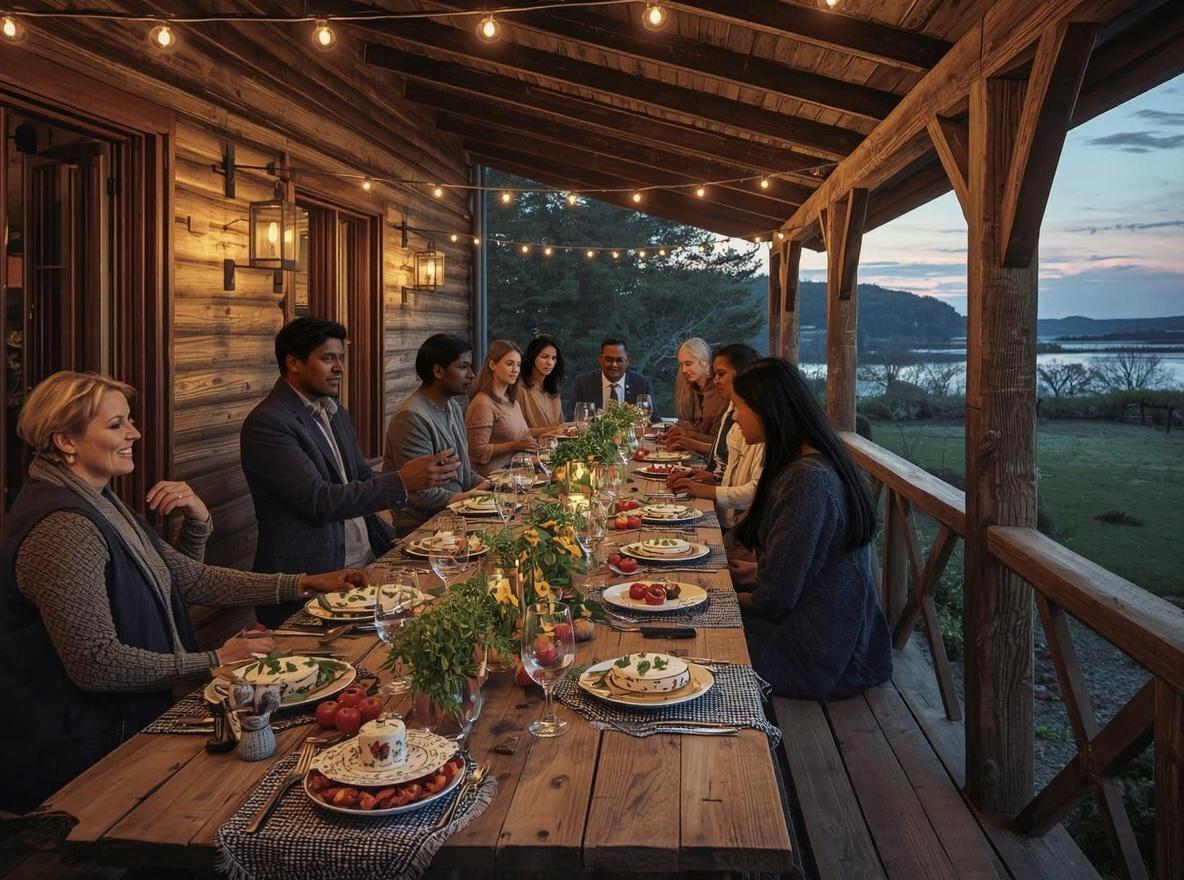
The discovery stage is intensely sensory. Guests feel the weight of soil on their hands, hear roosters at dawn, and taste tomatoes still warm from the sun. They are invited into workshops where they learn to bake with herbs they just picked, or join a harvest dinner where every course is introduced like a character in a story. In this moment, the distance between urban life and rural production becomes visible.
Many realize how much invisible labour sits behind their supermarket habits. Others notice something more private: for the first time in months, their nervous system feels quiet.
Stage 4: Validation – Is This Just a Beautiful Lie?
After the high of the stay, the mind starts testing the fantasy. Was that weekend a glimpse of a possible future or a very expensive movie set?
Global numbers show that genuine homesteading has become harder, not easier. A recent report notes that land prices doubled between 2008 and 2022, while just one percent of the largest farms now hold around 70% of the world’s farmland. Many small farms have disappeared, and those that remain often use agritourism as a survival strategy, not as a side hobby.
Here lies the uncomfortable truth behind the Instagram romance: the more exclusive the land becomes, the more “living off the land” turns into something people rent by the night. For visitors, the validation stage means asking whether their admiration is helping rural life stay alive or simply paying for illusions.
Some travelers begin to look for stays where their money supports real family farms, not just design‑driven resorts. They start comparing places by impact, not by pool temperature.
Stage 5: Decision – Fantasy, Ally, or New Life?
The decision rarely comes in a single moment. Instead, the experience of that first stay begins to steer a series of small choices.
For some, the verdict is simple: “This remains a fantasy I visit once a year.” They keep booking beautiful agritourism stays, but treat them as restorative retreats, not lifestyle rehearsals. The goal is rest, not reinvention.
Others decide to become allies rather than owners. They seek out modest guesthouses and authentic farm stays in regions like rural Portugal, Italy’s countryside, or northern Poland, where independent farmers use tourism to keep family land alive. They buy local food, learn about soil, and talk with hosts about climate, migration, and future harvests. Each trip becomes a quiet political choice.
A third group goes further. The weekend trip becomes research. They start asking what it would take to live somewhere similar for one season or more. Not as an influencer set, but as a messy, honest experiment in slow living.
Stage 6: Adoption – One Season of Real Slow Living
Adoption rarely looks like buying a dream estate. Often, it begins with one season. A couple rents a small house in a village near a lake. A remote worker negotiates a three‑month stay in a Polish agritourism farm, trading longer bookings for lower prices. A family spends summer in a rural region where their children can see where bread, milk, and berries actually come from.
This is where the shortcuts of a luxury resort disappear. There is no daily housekeeping or curated wine cellar. Instead, there is mud, bad Wi‑Fi, and neighbours who might not speak English. There are early mornings when the rooster feels less poetic.
At the same time, a different kind of luxury appears. Time stretches. Meals last longer. The weather decides the schedule. People remember what a walk without headphones feels like. They learn to accept boredom, then discover it is not boredom at all, but space.
For many, one honest season is enough to understand whether this path is sustainable. Some return to the city with deep relief, knowing they preferred the dream to the reality. Others feel homesick for the little road between the field and the village shop and start planning a slower, more permanent shift.
What This Means for Slow Living and Travel in 2026
The rise of luxury farm resorts marks a bigger shift in what “glamorous” means. Status no longer leans only on branded champagne and marble lobbies; it increasingly includes quiet landscapes, local bakeries, and the right to see stars at night. “Quiet luxury” in fashion—understated clothes without visible logos—has its twin in travel: places that signal wealth through access to space, time, and clean food rather than spectacle.
For a platform like Slovlog.in, which focuses on slow living, work‑life balance, and nomadic life, this moment is a crossroads. It is an opportunity to talk honestly about the difference between buying the image of rural life and building relationships with real rural communities. It is also a chance to show how regions like Warmia‑Mazury or other under‑marketed countryside areas can offer deep, affordable versions of what five‑star agritourism only hints at.
In the end, the buyer’s journey around luxury farm stays is not just about tourism. It is about how people in 2026 choose to relate to land, labour, and time itself. Some will keep renting the dream by the weekend. Others will quietly plant something more lasting, even if it is just a balcony herb garden and a long‑term relationship with a nearby farm.
Both paths start with the same feeling: the sense that life is moving too fast, and that somewhere beyond the city lights, a slower rhythm is still possible.
FAQs
1. What is a “luxury farm resort”?
A luxury farm resort combines high‑end amenities—spas, curated wine cellars, designer interiors—with access to working farmland, harvest dinners, and nature‑based activities like horseback riding or gardening.
2. Why are farm stays suddenly so popular?
Influencers have glamorized homesteading on Instagram and TikTok, while platforms like Airbnb report double‑digit growth in farm‑stay searches, especially after the pandemic pushed people to seek nature and self‑sufficiency.
3. Are these resorts helping or hurting real farmers?
The impact is mixed: some independent farms use agritourism to survive and diversify income, while others risk turning land into a backdrop for themed luxury that few locals can afford.
4. How expensive can luxury farm stays get?
Top‑tier properties, such as Blackberry Farm in the United States, can charge up to about 3,000 dollars per night for all‑inclusive experiences with gourmet dining and extensive activities.
5. Why is real homesteading becoming harder?
Global land prices doubled between 2008 and 2022, and around one percent of the largest farms now control roughly 70% of farmland worldwide, making ownership difficult for new small‑scale farmers.
6. What is the difference between a farm fantasy and slow living?
A farm fantasy focuses on curated experiences and aesthetics, while slow living is an ongoing lifestyle that embraces imperfect routines, local relationships, and sustainable choices beyond a weekend stay.
7. How can travelers support authentic rural life in places like Poland?
Choosing family‑run guesthouses, longer stays, local food, and less‑known regions—such as lake districts and small villages highlighted in slow‑travel guides—directly supports communities rather than only high‑end resort owners.